

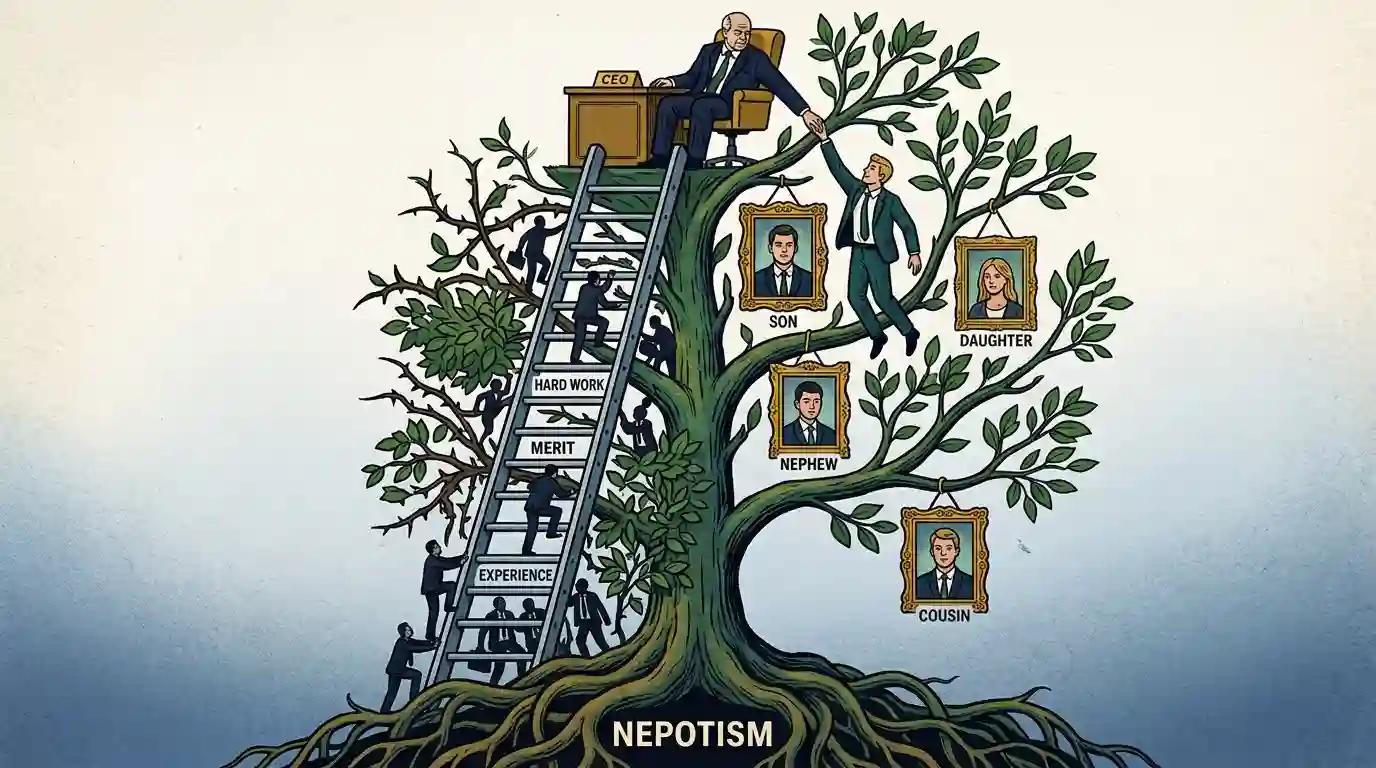
Nepotism means giving special treatment to family members because they are relatives. It often happens when someone gives a job, promotion, or important position to a family member instead of choosing the most qualified person.
For example, a company owner may hire their nephew even when another person has better skills and more experience. If the owner chooses the nephew because of their family connection, this may be nepotism.
Nepotism can happen in workplaces, family businesses, government offices, politics, schools, and entertainment. It is often seen as unfair because people may get opportunities through family connections instead of their skills.
This guide explains the meaning of nepotism in English, its synonyms, examples, workplace and legal meanings, and translations into different languages.
What Does Nepotism Mean in English?
The word nepotism means showing favoritism toward relatives by giving them jobs, promotions, benefits, or other opportunities.
It is linked to the word kinship, which means a family relationship.
For example, imagine a manager has two job applicants. One has five years of experience, while the other is the manager’s nephew with no experience. If the manager hires the nephew only because they are related, this may be nepotism.
Simple definition: Nepotism means giving family members special treatment because they are relatives.
Nepotism Meaning in Simple Words
In simple words, nepotism means helping your relatives get opportunities that other people may not receive.
Here are some examples:
- A manager gives their brother a job without a fair hiring process.
- A business owner promotes their daughter over more qualified workers.
- A company gives a relative a higher salary without a clear reason.
- A government official uses their position to help a family member get a job.
Hiring a relative does not always mean nepotism. Family members can work together fairly when they have the right skills and follow the same rules as other employees.
Origin of the Word Nepotism
The word nepotism comes from the Italian word nepotismo. It is linked to the Latin word nepos, which means nephew or grandson.
The word became well known through the history of the Catholic Church. During the Renaissance, some popes gave important church positions to their nephews and other relatives.
These relatives sometimes received positions because of family connections rather than their skills. Over time, the word became linked to favoritism toward family members in many areas of life.
How Do You Pronounce Nepotism?
Nepotism is pronounced:
NEP-uh-tiz-um
It is a noun used to describe special treatment given to relatives.
Example: The company faced criticism for nepotism after the owner’s relatives received important jobs.
Common Nepotism Examples
Nepotism can happen in many parts of life.
1. Hiring a Family Member
A company owner hires their nephew even though another applicant has better qualifications and more experience.
2. Promoting a Relative
A manager promotes their brother instead of an employee who has better work results.
3. Family Business
A business owner gives their son an important position without checking whether they have the right skills.
4. Politics
A political leader uses their influence to help a relative get a government position.
5. Entertainment
A famous actor or producer helps a family member get an opportunity in movies, television, or music.
Having a famous relative does not automatically mean nepotism. The term is used when family connections provide special advantages.
Nepotism Meaning in the Workplace
Workplace nepotism means giving relatives special treatment in hiring, recruitment, promotions, salaries, or other work decisions.
For example, a manager may hire their son even when another applicant has better qualifications. A manager may also give a relative better working hours or faster promotions.
Common Signs of Workplace Nepotism
- Unfair hiring: A relative gets a job without meeting the normal requirements.
- Unfair promotions: Family members receive promotions without strong work results.
- Special treatment: Relatives receive benefits that other workers do not get.
- Different rules: Managers apply workplace rules differently to relatives.
- Limited opportunities: Qualified workers are often overlooked.
- Lack of transparency: Managers do not explain their hiring decisions.
These signs do not always prove nepotism. It is important to look at the facts and reasons behind each decision.
How Does Workplace Nepotism Affect Employees?
Nepotism can create problems for workers and companies.
- Employees may lose motivation.
- Workers may feel that promotions are unfair.
- Workplace conflict may increase.
- Unqualified relatives may struggle with their jobs.
- Employees may lose trust in managers.
- A company’s reputation may suffer.
Fair hiring practices and clear promotion rules can help reduce these problems.
Nepotism Meaning in Law
In law, nepotism generally refers to giving relatives jobs, positions, or benefits through the use of official power or influence.
In the United States, nepotism is not automatically illegal in every workplace. However, some government positions have strict anti-nepotism rules.
For example, federal law under 5 U.S.C. § 3110 limits certain public officials from appointing, employing, promoting, or advocating for relatives in federal agencies.
State and local governments may have their own rules. Private companies may also have policies that limit family relationships at work.

What Does Anti-Nepotism Mean?
Anti-nepotism means rules or policies designed to prevent unfair treatment of relatives in hiring, promotions, and other decisions.
An anti-nepotism policy may:
- Stop managers from hiring relatives directly.
- Prevent employees from supervising close family members.
- Require workers to report family relationships.
- Make sure all applicants follow the same hiring process.
- Require fair and clear promotion decisions.
These policies help support equal opportunity and reduce conflicts of interest.
Nepotism Meaning Synonyms
Several words have meanings related to nepotism. However, they are not always interchangeable.
| Synonym | Meaning |
|---|---|
| Favoritism | Giving someone special treatment. |
| Partiality | Showing preference for one person. |
| Bias | Having an unfair preference. |
| Preferential treatment | Treating someone better than others. |
| Cronyism | Giving advantages to friends or close associates. |
| Unfair advantage | Giving someone a benefit that others do not receive fairly. |
What Is the Opposite of Nepotism?
The opposite of nepotism is fair and equal treatment.
Related terms include:
- Equal opportunity
- Impartiality
- Meritocracy
- Fair hiring
- Merit-based selection
- Equal treatment
A meritocracy is a system where people receive opportunities based on their skills, abilities, and achievements.
Nepotism vs. Favoritism vs. Cronyism
These three terms are related, but they have different meanings.
| Term | Meaning | Example |
|---|---|---|
| Nepotism | Favoring relatives. | Hiring your nephew because he is family. |
| Favoritism | Giving special treatment to someone. | Giving your favorite worker better benefits. |
| Cronyism | Favoring friends or close associates. | Giving a job to a close friend. |
The main difference is the relationship between the people involved. Nepotism involves family connections, while cronyism involves friends or personal connections.
What Does Nepotism Baby Mean?
A nepotism baby, often called a nepo baby, is a person who gets career opportunities partly because of their famous or powerful family.
For example, the child of a famous actor may get an early opportunity in movies because of their parent’s name and connections.
The term is often used in the entertainment industry. It can describe actors, singers, models, or other people whose family connections may help their careers.
Having famous parents does not mean a person has no talent or skills. The term focuses on the advantages that family connections can provide.
What Does Nepotismo Mean?
Nepotismo is the Spanish and Italian word for nepotism.
It describes giving relatives special treatment or advantages, especially in jobs, business, or government positions.
Example: A company may face criticism for nepotismo if its owner gives important jobs to family members without a fair selection process.
What Does Nepotisme Mean?
Népotisme is the French word for nepotism.
It means giving family members special treatment or opportunities because of their family connections.
The word is used in discussions about politics, business, government, and workplace fairness.
Nepotism Meaning in Different Languages
The word nepotism has translations in many languages. The exact wording may change based on the sentence and context.
| Language | Nepotism Meaning |
|---|---|
| Farsi (Persian) | خویشاوندسالاری |
| Hindi | भाई-भतीजावाद |
| Tamil | உறவினர்களுக்கு சலுகை காட்டுதல் |
| Urdu | اقربا پروری |
| Kannada | ಸ್ವಜನಪಕ್ಷಪಾತ |
| Bengali | স্বজনপ্রীতি |
| Telugu | బంధుప్రీతి |
| Malayalam | സ്വജനപക്ഷപാതം |
| Marathi | घराणेशाही / नातलगांना झुकते माप देणे |
| Chinese | 任人唯亲 |
| Arabic | المحسوبية |
| French | Népotisme |
These translations explain the idea of giving relatives special treatment. Some languages may use different words depending on the situation.

Types of Nepotism
Nepotism can happen in many areas.
1. Workplace Nepotism
This happens when managers or business owners give relatives special treatment in hiring, promotions, or salaries.
2. Political Nepotism
This happens when politicians or government officials use their influence to help relatives get public positions or benefits.
3. Family Business Nepotism
This happens when family members receive important business positions because of their family relationships instead of their qualifications.
4. Entertainment Nepotism
This happens when people receive opportunities in movies, music, or television because of their family connections.
Advantages and Disadvantages of Nepotism
Nepotism is usually seen as unfair. However, some people believe that family members working together can have certain benefits.
Possible Advantages
- Family members may already trust each other.
- Relatives may share the same business goals.
- Family members may help keep a family business running.
- Owners may have a better understanding of people they know.
These benefits do not mean that unfair hiring or promotion decisions are good.
Disadvantages
- Qualified people may lose job opportunities.
- Workers may feel ignored or undervalued.
- Unqualified relatives may struggle with their jobs.
- Workplace conflict may increase.
- Employees may lose trust in managers.
- A company’s reputation may suffer.
How Can Companies Prevent Nepotism?
Companies can reduce nepotism by using clear rules and fair hiring practices.
- Use fair hiring procedures: Judge all applicants by the same standards.
- Set clear promotion rules: Use skills, experience, and work results.
- Create company policies: Explain how family relationships should be handled.
- Report family connections: Make sure possible conflicts of interest are known.
- Use independent reviews: Ask neutral managers or HR staff to review decisions.
- Provide reporting options: Give workers a safe way to report unfair treatment.
- Apply rules equally: Make sure relatives follow the same workplace rules as everyone else.
Frequently Asked Questions About Nepotism
Nepotism means giving relatives special treatment or advantages because of family connections.
Nepotism in Farsi is commonly translated as خویشاوندسالاری. It describes favoritism toward relatives.
Nepotism in Hindi is commonly called भाई-भतीजावाद. It means giving family members special treatment.
Nepotism in Tamil can be explained as உறவினர்களுக்கு சலுகை காட்டுதல், which means giving special treatment to relatives.
Nepotism in Urdu is called اقربا پروری. It means favoring relatives or family members.
Nepotism in Kannada is commonly expressed as ಸ್ವಜನಪಕ್ಷಪಾತ, meaning favoritism toward one’s own relatives.
Nepotism in Bengali is commonly called স্বজনপ্রীতি. It means showing special favor to relatives.
Nepotism in Telugu can be expressed as బంధుప్రీతి, which means favoring family members or relatives.
Final Thoughts
Nepotism means giving family members special treatment because they are relatives. It can happen in workplaces, businesses, politics, government, and entertainment.
The word also has different translations, including Farsi, Hindi, Tamil, Urdu, Kannada, Bengali, Telugu, Malayalam, Marathi, Chinese, Arabic, and French.
Understanding nepotism can help people recognize unfair treatment and its effects. Fair hiring, equal opportunity, and clear workplace rules can help reduce nepotism and create a better work environment.

Adrian Foster writes clear guides on word meanings, text abbreviations, name meanings and synonyms. He explains each term in plain language with simple examples, so readers can understand it quickly and use it with confidence.